

 Read an excerpt
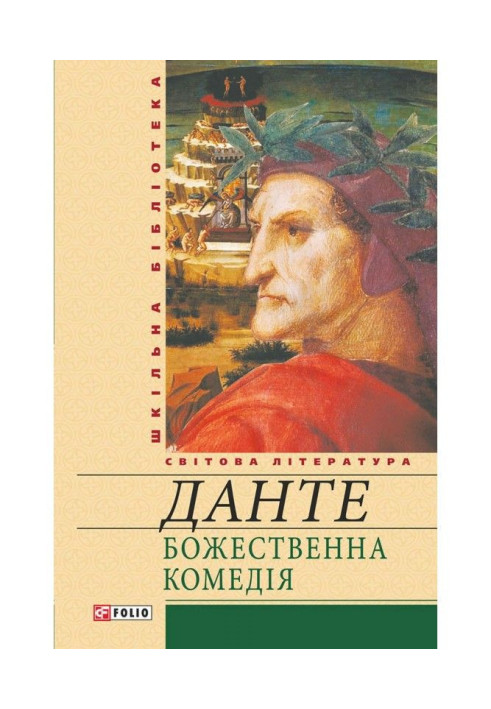
Book Divine Comedy
Among the monuments of world literature, the brilliant "Divine Comedy" by Dante Alighieri (1265-1321) occupies one of the prominent places. In his grandest work, the poet depicted the dramatic fate of the human soul in a symbolic and allegorical form: its death in hell, rebirth in purgatory, triumph in paradise. Dante's poem is the most significant phenomenon of the High Middle Ages and to some extent a harbinger of Renaissance culture.
- Name of the Author
- Алигьери of Данте
- Number of pages
- 450
- Language
- Ukrainian
- Cover
- Hard
- Series
- Шкільна бібліотека української that світової літератури
Reviews
More books by this author

Book Divine comedy. Paradise
73 UAH
66 UAH

Book Divine comedy
130 UAH
117 UAH

Book New life
86 UAH
78 UAH

Book Dante's world. Volume two (small...
196 UAH
177 UAH

Book The Divine Comedy. Purgatory
106 UAH
96 UAH

Book The Divine Comedy in Quotes and...
121 UAH
109 UAH

Book The Divine Comedy. New life
196 UAH
177 UAH

Book New life
86 UAH
78 UAH

Book The Divine Comedy. Purgatory
106 UAH
96 UAH

Book Essays
106 UAH
96 UAH

Book The Divine Comedy. New life
196 UAH
177 UAH

Book Divine Comedy / Divina commedia
73 UAH
66 UAH

Book Divine comedy. Paradise
73 UAH
66 UAH

Book Divine comedy
141 UAH
127 UAH
More books on this topic
Book Divine comedy
141 UAH
127 UAH

Book Divine comedy
130 UAH
117 UAH

Book Omar Khayyam. The best aphorisms
73 UAH
66 UAH

Book Geisha songs. Kouta
29 UAH
27 UAH

Book Science of love (collection)
29 UAH
27 UAH

Book Poetry of French symbolism
15 UAH
14 UAH

Book Outlines of the last bank. Verses
195 UAH
176 UAH

Book Софокл and his tragical work....
123 UAH
111 UAH

Book Magic garden of east wisdom
88 UAH
80 UAH

Book A princess rescues itself. Blank...
118 UAH
107 UAH
Among the monuments of world literature, the brilliant "Divine Comedy" by Dante Alighieri (1265-1321) occupies one of the leading places. In his grandest creation...
03/30/2023
Величезний шедевр світової літератури, який залишає за собою нез
"Божественна комедія" - це твір, який не просто читається, а відчувається кожним словом, кожним віршем, кожним образом. Данте Аліг'єрі вдало поєднав у своїй поемі символізм, алегорію та філософські думки, розкриваючи перед читачем драматичну долю людської душі. Подорожуючи через пекло, чистилище та рай разом із поетом, ми переживаємо величезний духовний розвиток і відчуваємо глибокі емоції кожного персонажа. "Божественна комедія" - це не лише літературний шедевр, але й філософське втілення великих істин, які залишаються актуальними й сьогодні. Ця книга - обов'язкова для прочитання кожним, хто цінує високу літературу та шукає відповіді на вічні питання людства. Рекомендую з усією відданістю!