
 Read an excerpt
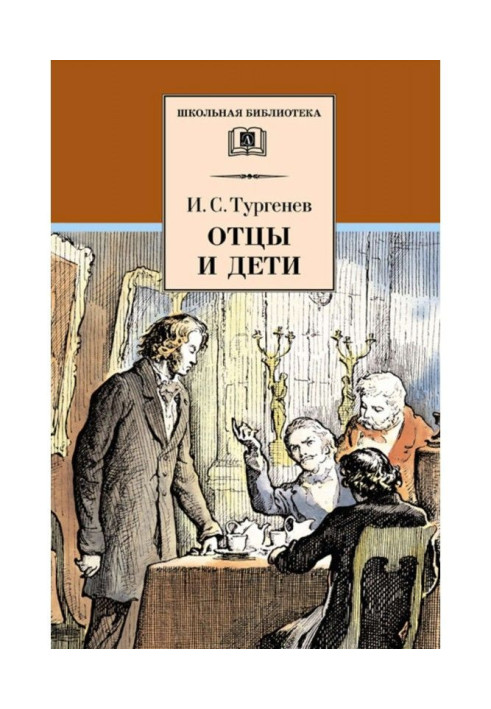
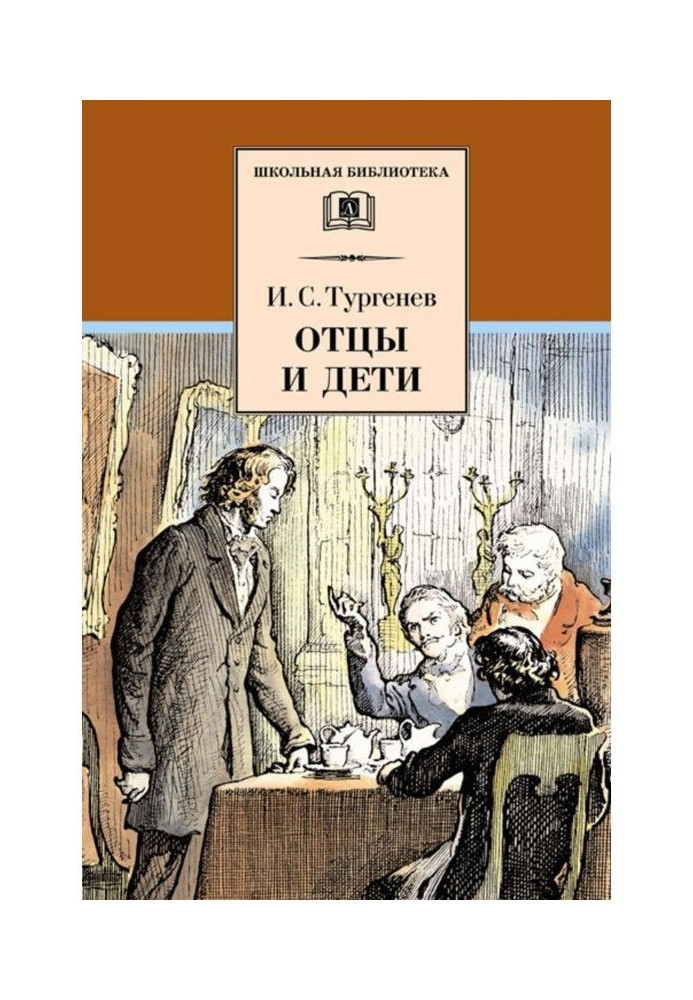
Book Fathers and children
"Fathers and children" (1862) are a stage, sign, cult novel for the time. But as far as changing of historical epochs he does not lose the actuality in any way. Certainly, hard-edged Evgeny Базаров, protagonist of novel, became an ensample modern to him youth - his world view, persuasions, vital principles, and even manner of behavior inspired many future "nihilists". But in Russia "by virtue of her cyclic development an ideological matrix is every fifteen-twenty years replaced, and every next generation appears in ideological - and moral - perpendicular to the "fathers" . The dramatic effect of this opposition does not go down, and that is why a serious modern reader will read this great book with not less interest and benefit, what his coeval one and a half centuries ago. Even if she is "passed" at school. At producing of classic books to us, to the publishing house "Time", it was very desirable to create really modern series, show living connection of the never fading classics and surrounding reality. Therefore we appealed to the known literati, scientists, journalists and cultural workers with a request to write the accompanying articles to the books chosen by them are not dry explanation texts and not cribs to examinations, and the family explanations in love to their expensive hearts to the authors. At someone turned out in grand style and touching, for someone посуше and поакадемичней, but it always sincerely and interestingly, and sometimes - unexpectedly and unusually. In love a writer, poet, publicist, literary critic and teacher of literature Dmitry Быков, confesses to "Fathers and children" - a book needs to be read already in order that to collate the opinion with the article and give a glance on work under other corner.
- Name of the Author
- Тургенев Ivan Sergeevich
- Number of pages
- 167
- Language
- Russian
- Cover
- Hard
- Age
- 12
- Series
- School library (Child's literature)
- Release date
- 1860–1861
Reviews
More books by this author

Book Letter to Petersburg students
11 UAH
10 UAH

Book Nobiliary nest. Fathers and...
54 UAH
49 UAH

Book Nobiliary nest
11 UAH
10 UAH

Book Pegasus
11 UAH
10 UAH

Book Fathers and children
27 UAH
25 UAH

Book Speech, prepared for dinner in...
11 UAH
10 UAH

Book Preface to the translation of...
11 UAH
10 UAH

Book To students of women's medical...
11 UAH
10 UAH

Book Poems of Baratynsky
11 UAH
10 UAH

Book Fathers and Sons. Asya. Tales....
98 UAH
89 UAH

Book Poetic sketches
11 UAH
10 UAH

Book Speech, prepared for dinner in...
11 UAH
10 UAH

Book Drop of life
11 UAH
10 UAH
More books on this topic

Book Poems by Apollon Maikov
11 UAH
10 UAH

Book Abraham
11 UAH
10 UAH

Book About Turgenev
11 UAH
10 UAH

Book Through our prism
11 UAH
10 UAH

Book Compositions of Alexander...
11 UAH
10 UAH

Book Fairy of Fantasy
11 UAH
10 UAH

Book To our children
11 UAH
10 UAH

Book Ruth and Rufina
11 UAH
10 UAH

Book Dad-cake
11 UAH
10 UAH

Book Cat
11 UAH
10 UAH
"Fathers and children" (1862) are a stage, sign, cult novel for the time. But as far as changing of historical epochs he does not lose the actuality in any way. Конеч...
05/11/2023
Не відповідає очікуванням
Читаючи цей роман, я сподівався на більшу глибину та емоційність. Хоча "Батьки і діти" вважається класичним твором, я відчував певну відстань між собою і персонажами, а також відчуття застарілості деяких ідеї. Сюжет роману, хоч і цікавий, але не завжди здавався мені цілісним і переконливим. Можливо, ця книга просто не відповідає моїм сучасним літературним уподобанням. Однак, я вважаю, що для любителів класики цей роман може бути цікавим відкриттям.