
 Read an excerpt
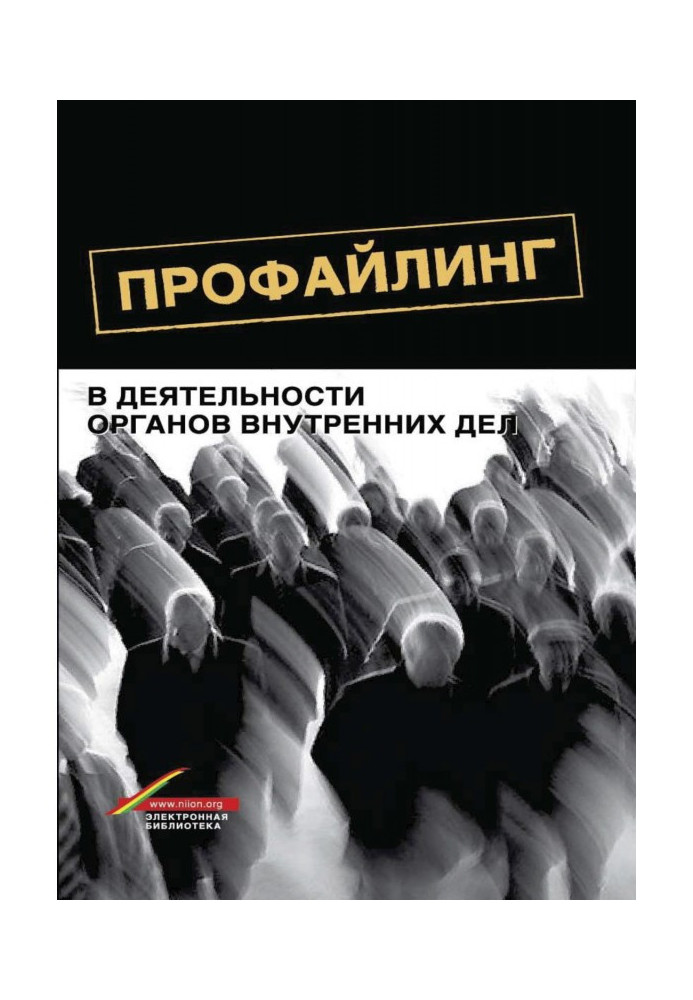
Book Profiling in the activities of internal affairs bodies
- Name of the Author
- Collective of authors
- Number of pages
- 152
- Language
- Russian
- Cover
- Hard
More books by this author

Book Life in six words
56 UAH
51 UAH

Book Love letters of great people. Men
76 UAH
69 UAH

Book Break-off point
151 UAH
136 UAH

Book A child from birth to one year....
95 UAH
86 UAH

Book New history of Asian and African...
121 UAH
109 UAH

Book Khrushchev, Brezhnev, Gorbachev....
56 UAH
51 UAH

Book Guiding star
151 UAH
136 UAH

Book Volume 13 (XVI century,...
196 UAH
177 UAH

Book Sacred geography
91 UAH
82 UAH

Book Apartment decoration. Stylish...
76 UAH
69 UAH

Book Ancient Rus' in the light of...
91 UAH
82 UAH

Book Valeology. Practicum
119 UAH
108 UAH

Book Services of first седмицы of the...
195 UAH
176 UAH

Book Complete guidance on excision by...
127 UAH
115 UAH
More books on this topic

Book Devices and controls after a...
274 UAH
247 UAH

Book Жили-были. 28 lessons of Russian...
147 UAH
133 UAH

Book Hunting dog breeding. Cynology
86 UAH
78 UAH

Book Introduction to existential...
86 UAH
78 UAH

Book Calculations of vent systems
98 UAH
89 UAH

Book Planning of reinforce-concrete...
110 UAH
99 UAH

Book Reinforce-concrete and lithoidal...
475 UAH
428 UAH

Book A Way to Success : English...
117 UAH
106 UAH

Book Bases of welding production
386 UAH
348 UAH

Book A Way to Success : English for...
139 UAH
126 UAH