

 Read an excerpt
Book Politics of poetics
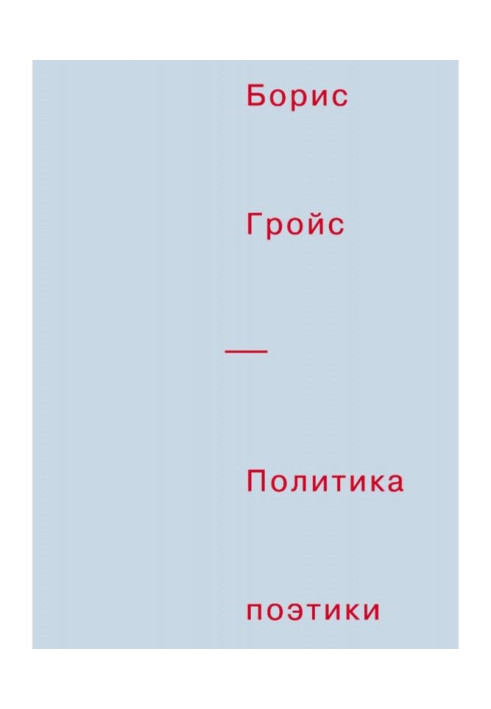
Collection of reasons of philosopher and theorist of modern art Boris Гройса is made by it from works entering his books of Art Power (MIT Press, 2008) and Going Public (Sternberg Press, 2010), and also from reasons going out in the American and European magazines and catalogues.In the format of a4.pdf is stored publishing layout.
- Name of the Author
- Гройс Boris
- Number of pages
- 497
- Language
- Russian
- Cover
- Soft
- Age
- 12
- Release date
- 2012
Reviews
More books by this author

Book About new. Experience of economy...
147 UAH
133 UAH

Book About new. Experience of economy...
147 UAH
133 UAH
More books on this topic

Book Bases of academic picture. 100...
49 UAH
45 UAH

Book All secrets. Classic landscape...
122 UAH
110 UAH

Book We study to draw charming girls...
73 UAH
66 UAH

Book Speech, prepared for dinner in...
11 UAH
10 UAH

Book How to draw the figure of man....
78 UAH
71 UAH

Book watercolor sketching
124 UAH
112 UAH

Book Because it is a modern art!
122 UAH
110 UAH

Book Portraits of fruit and...
132 UAH
119 UAH

Book Water-colour without rules....
112 UAH
101 UAH

Book Drawing techniques
123 UAH
111 UAH
Collection of reasons of philosopher and theorist of modern art Boris Гройса is made by it from works entering his books of Art Power (MIT Press, 2008) and Goin...
02/16/2022
Ця книга - справжнє скарбниця знань для всіх, хто цікавиться суч
"Політика поетики" - це вражаюча збірка статей від відомого філософа та теоретика мистецтва Бориса Гройса, яка складена з його найкращих робіт. Ця книга є справжнім джерелом знань про вплив мистецтва на суспільство, про те, як мистецтво може бути засобом політичного вираження та зміни. Автор детально розглядає питання взаємодії мистецтва та політики, розкриваючи нові погляди та ідеї, які заохочують читача думати ширше та глибше. Формат книги у вигляді a4.pdf зберігає видавничий макет, що додає додаткового комфорту під час читання. Рекомендую "Політику поетики" всім, хто цікавиться мистецтвом, філософією та суспільними процесами - ця книга точно залишить вас задуманими та надихнутими!