

 Read an excerpt
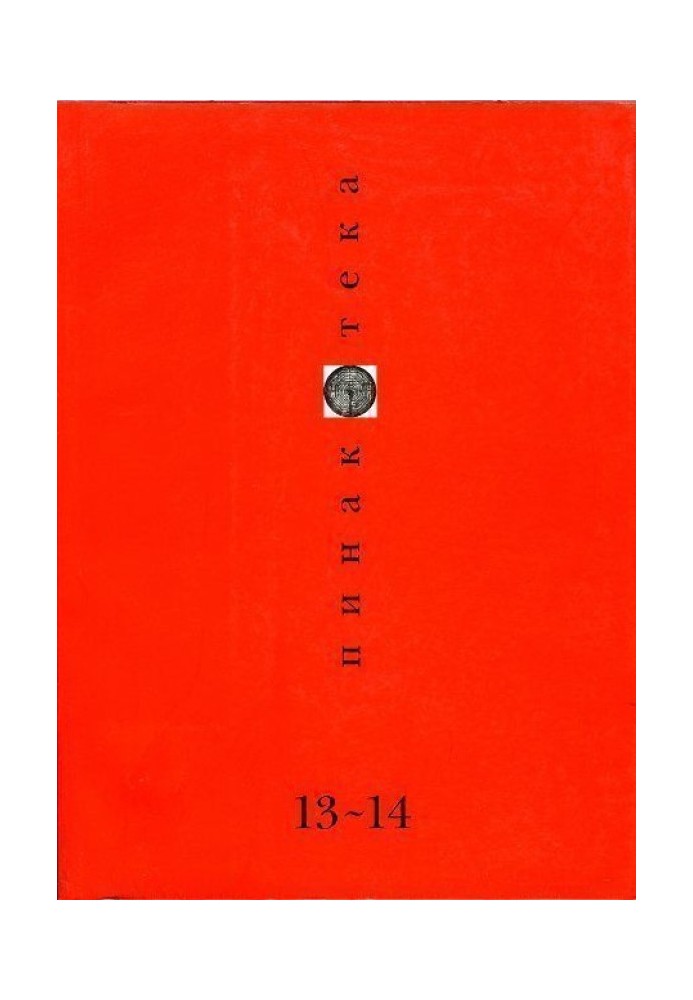
Book Pinakothek 2001 01-02
Coming up with a topic for an issue dedicated to the interaction of Russian and French cultures turned out to be an extremely difficult task. The reason is the extreme breadth of the subject, what we can more easily call in French – embarras de richesse. Isn’t it a wonderful example for the case, clarifying the extent of the difficulties that befell us. After all, speaking essentially, almost everything that in our culture is not golden-domed and gingerbread, we owe to France. By a coincidence of circumstances, Russia had the opportunity to enter the circle of Western European artistic tradition in the clearly Francocentric 18th century. And Russian art since modern times has been based on a French framework - just like the syntax of Pushkin’s speech. With the same dependence and with the same irreverence. In a strange way, it happened that the French influence on Russian culture is not so much participation as an example. With all the abundance of the influx of French works, masters, students and ideas, our own myth of beautiful, blessed France was of much greater importance for Russian art. This situation strikingly distinguishes Russian-French artistic contacts from the interaction of Russian culture with the cultures of other countries. That is why we settled on the theme of mutual myths, which sometimes created a crooked, and sometimes “magical” mirror for France and Russia. The history of the Falconet monument is indicative: the French sculptor sculpted his best statue in Russia, which not only went down in the history of Russian art as the most significant a work of plastic arts of the 18th century, but also with the pen of Pushkin it turned into a national myth - into the Bronze Horseman. The opposite situation: the Cossack invasion of Paris, which gave rise to the myth of the “wild Russian steppe” in the fantasies of the French. That myth that, having found an echo in its own dreams, provoked the Polovtsian scope and golden-cock exoticism of the “Russian Seasons”, which in turn... and so on and so forth. One cannot help but include “Roman Russe”, which had a significant impact on the French minds, and the strangely powerful and at the same time ghostly phenomenon of Russian artistic emigration, which had a significant impact on the French minds. And much more that turns into a cultural phenomenon when the “sharp Gallic mind” and impeccable taste collide with the elements of the god-creating Slavic breed.
- Name of the Author
- Collective of authors
- Number of pages
- 459
- Language
- Russian
- Cover
- Hard
Reviews
More books by this author

Book Resonance technique of singing...
146 UAH
132 UAH

Book Great October year after year...
136 UAH
123 UAH

Book Mom, I will have a book!
25 UAH
23 UAH

Book Lezi
56 UAH
51 UAH

Book The New Yorker 2015.08 August 24
86 UAH
78 UAH

Book Grantville Gazette 38
56 UAH
51 UAH

Book of Heretics
91 UAH
82 UAH

Book The Beatles. Anthology
124 UAH
112 UAH

Book History of private life. Volume II
231 UAH
208 UAH

Book heritage of the Solovetsky...
91 UAH
82 UAH

Book How much should you eat to lose...
76 UAH
69 UAH

Book Body of Knowledge on Business...
139 UAH
126 UAH

Book All About Romans
56 UAH
51 UAH

Book Ethnographic groups of...
159 UAH
144 UAH

Book Kurt Cobain. Graphic novel
142 UAH
128 UAH
More books on this topic

Book Notes on the fields of the "Name...
59 UAH
54 UAH

Book Mediterranean and Mediterranean...
112 UAH
101 UAH

Book Because it is a modern art!
122 UAH
110 UAH

Book Impressionism. Most humane painting
185 UAH
167 UAH

Book Country of ancient ариев and the...
47 UAH
43 UAH

Book All about Spain
89 UAH
81 UAH

Book History of the Chinese clothing
98 UAH
89 UAH

Book Era of Mercury. Jewries are in...
147 UAH
133 UAH

Book Chinese traditions and customs
171 UAH
154 UAH

Book Era of Mercury. Jewries are in...
288 UAH
260 UAH
Coming up with a topic for an issue dedicated to the interaction of Russian and French cultures turned out to be an extremely difficult task. The reason is t...
04/01/2023
Вражаюче дослідження культурних зв'язків!
Книга "Пінакотека 2001 01-02" є неймовірно глибоким і продуманим дослідженням взаємодії російської та французької культур. Автор зумів майстерно підняти питання про складність і багатогранність цього процесу, вказуючи на те, як французька культура вплинула на російське мистецтво та літературу. Особливо вражає, як автор аналізує не лише факти, а й міфи, які виникли внаслідок цього культурного обміну. Взаємодія між цими двома культурами представлена не лише як простий вплив, а як складний діалог, що триває вже століттями. Книга спонукає до роздумів про те, як ми сприймаємо інші культури і як вони формують нашу ідентичність. Рекомендую цю працю всім, хто цікавиться культурологією, мистецтвом та історією, адже вона відкриває нові горизонти в розумінні культурних зв'язків між країнами.