

 Read an excerpt
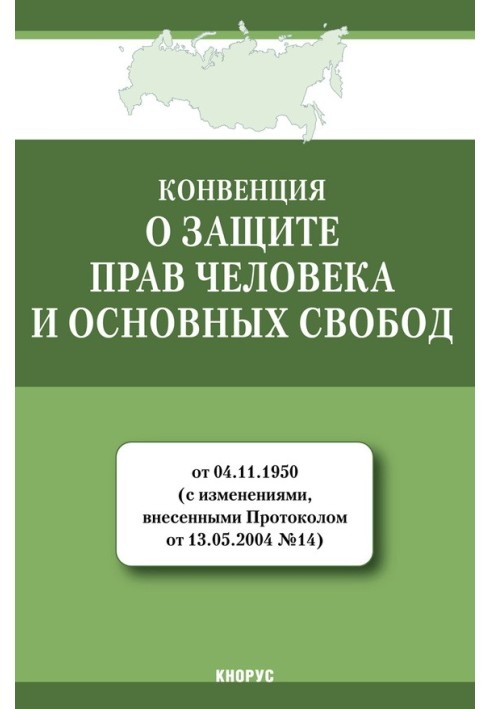
Book Convention for the Protection of Human Rights and Fundamental Freedoms
Convention for the Protection of Human Rights and Fundamental Freedoms of November 4, 1950 (as amended by Protocol No. 14 of May 13, 2004)
- Name of the Author
- Collective of authors
- Number of pages
- 418
- Language
- Russian
- Cover
- Hard
More books by this author

Book Cambridge School. Theory and...
176 UAH
159 UAH

Book Admirer of your talent: art and...
46 UAH
42 UAH

Book Just Maria 2
95 UAH
86 UAH

Book Detective collection
136 UAH
123 UAH

Book History of political and legal...
146 UAH
132 UAH

Book The New Yorker 2015.07 July 27
86 UAH
78 UAH

Book Ghost Ship: Icelandic Ghost Stories
76 UAH
69 UAH

Book A glass of vodka on the table
76 UAH
69 UAH

Book Body of Knowledge on Business...
139 UAH
126 UAH

Book Vikings
151 UAH
136 UAH

Book Rev. Fathers Barsanuphius and...
146 UAH
132 UAH

Book Financial Literacy Guide
135 UAH
122 UAH

Book The invisible front of the...
176 UAH
159 UAH

Book Basics of economic knowledge
134 UAH
121 UAH

Book We prepare to ОГЭ. Mathematics....
32 UAH
29 UAH
More books on this topic

Book Reconstruction of circumstances...
235 UAH
212 UAH

Book ДТП. Practical recommendations...
25 UAH
23 UAH

Book Legal marketing. How to attract...
122 UAH
110 UAH

Book A search is a sign of success....
235 UAH
212 UAH

Book Psychological and psychiatric...
122 UAH
110 UAH

Book Medical and judicial psychology
229 UAH
207 UAH

Book Moslem right. Bibliographic...
66 UAH
60 UAH

Book An islam and human rights are in...
54 UAH
49 UAH

Book American tragedies. Chronics of...
239 UAH
216 UAH

Book Lawyer. Personal brand.
138 UAH
125 UAH
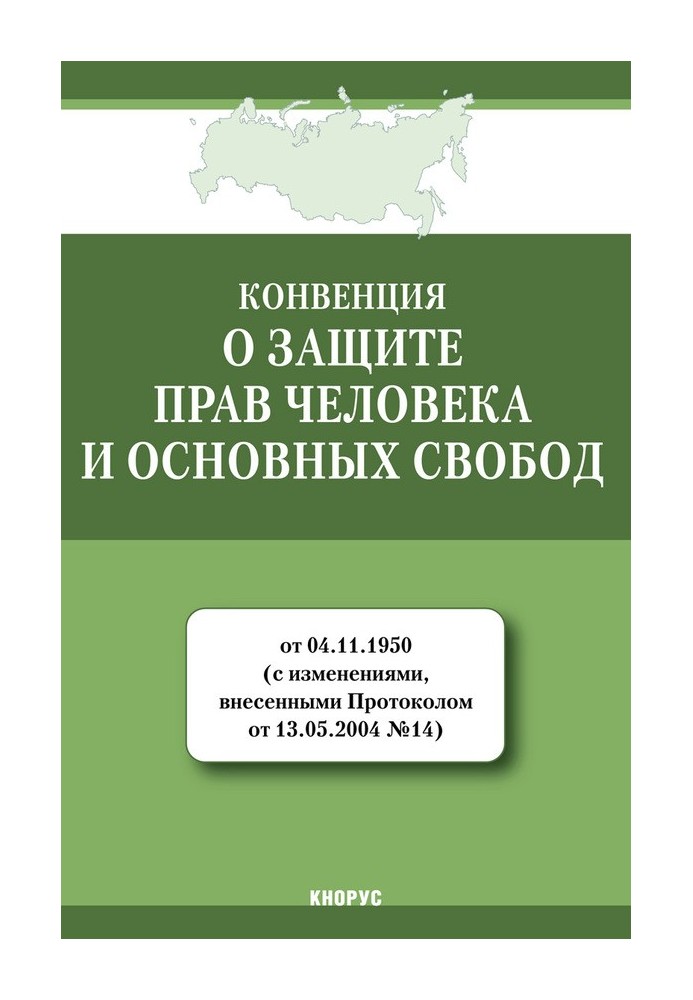
Convention for the Protection of Human Rights and Fundamental Freedoms of November 4, 1950 (as amended by Protocol No. 14 of May 13, 2004)