

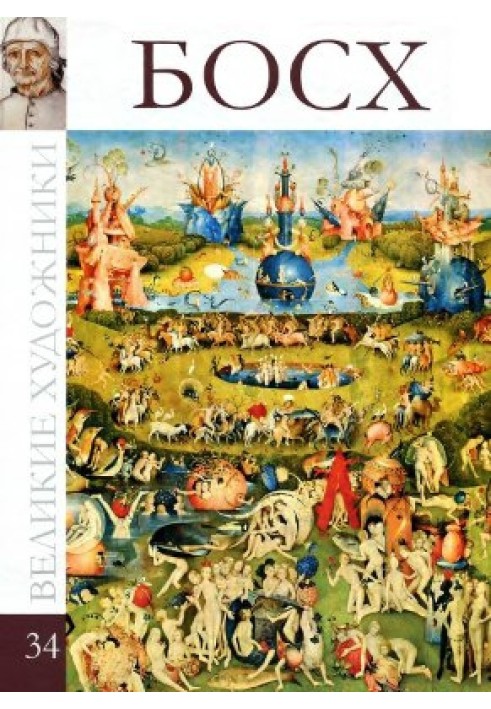

Book Bosch
Hieronymus Bosch (1450-1516) is a Dutch painter who intricately combined in his paintings medieval mystical ideas about the world, features of folklore, philosophical parables and satire. The work of this “emeritus professor of nightmares” remains exciting and mysterious to this day, and his artistic legacy has no analogues in world art.
Of the relatively small number of surviving works by Bosch, only 7 are signed and none are dated by the artist. Most often, the pictures are of a moralizing and didactic content (“Removing the Stone of Stupidity”, “Ship of Fools”). Genre-allegorical scenes, full of crude humor, are written in the detailed, “enamel” painting style of the old Netherlanders. They are dominated by a feeling of painful anxiety for the absurd state of humanity, mired in all kinds of filth. Bosch's main masterpieces, which ensured his posthumous fame, are large altar triptychs, the earliest of which is considered to be “A Wagon of Hay”. The crowded action of the central part of the altar is played out between Heaven on the left and Hell on the right wing - visually the beginning and end of the earthly path of the dissolute human mass. The plot of the main scene plays on the proverb “the world is a cart of hay, everyone drags from it as much as they can.” In the triptych with the Temptation of Saint Anthony, all visible space turns into an earthly hell, flickering with ominous flashes, full of vile, fantastic, but at the same time naturalistically convincing creatures. The picturesque glazes are at the same time surprisingly refined, and most importantly, through all the confusion, the will to self-knowledge emerges, curbing the raging natural elements. The same humanistic motif can be heard in the cycle of one-part paintings about holy ascetics (“St. Jerome in repentance”), where the landscape, the same element, “pacifies” before our eyes from the foreground to the distance, as if demonstrating the fruits of an intense moral struggle. One way or another, the outcome of this struggle as a whole appears intriguingly uncertain. In the most famous and largest triptych (“Garden of Delights”), the action, traditionally for Bosch, takes place between Heaven on the left and Hell on the right - in the center there is an amazing “Hell-Paradise”, where beautiful naked humanity turns out to be the highest graceful fruit and at the same time a passive victim of plant-animal nature, which surrounds people with traps in the form of giant berries, insects, animated rocks and other “surreal” details.
- Name of the Author
- Автор Неизвестен -- Искусство
- Language
- Russian
Reviews
More books by this author

Book Aesthetics and theory of art of...
146 UAH
132 UAH

Book Ge
91 UAH
82 UAH

Book Surikov
91 UAH
82 UAH

Book Durer
91 UAH
82 UAH

Book Renoir
91 UAH
82 UAH

Book Kramskoy
91 UAH
82 UAH

Book Cezanne
91 UAH
82 UAH

Book Caravaggio
76 UAH
69 UAH

Book Claude Monet
91 UAH
82 UAH

Book Henri Toulouse-Lautrec
46 UAH
42 UAH

Book Jacques Louis David
46 UAH
42 UAH

Book Aesthetics and theory of art of...
146 UAH
132 UAH

Book Vermeer
76 UAH
69 UAH

Book Petrov-Vodkin
76 UAH
69 UAH

Book Kiprensky
76 UAH
69 UAH
More books on this topic

Book Quick sketches with Anna Aegis
244 UAH
220 UAH

Book The Girl Who Raced Fairyland All...
131 UAH
118 UAH

Book Baroque as connection and rupture
151 UAH
136 UAH

Book The machinery of the portrait....
151 UAH
136 UAH

Book Volume 5. People are so bored in...
137 UAH
124 UAH

Book Ugly Baroque
151 UAH
136 UAH

Book Foreign painting from Jan van...
131 UAH
118 UAH

Book ART: Everything you need to know...
121 UAH
109 UAH

Book Secrets and techniques for easy...
151 UAH
136 UAH

Book Grabar
76 UAH
69 UAH
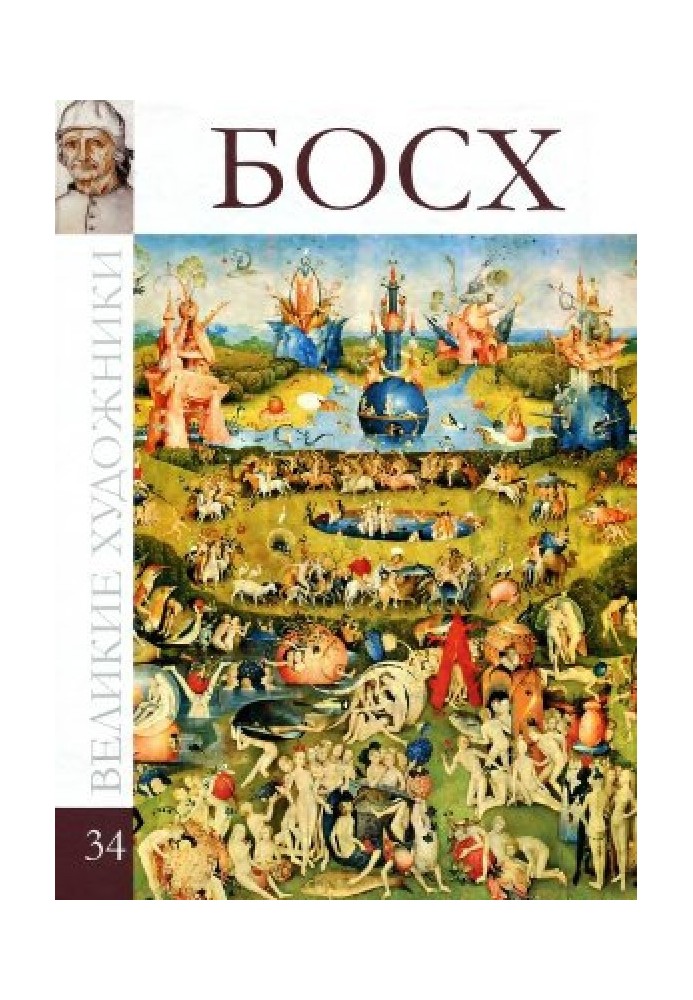
Hieronymus Bosch (1450-1516) is a Dutch painter who intricately combined in his paintings medieval mystical ideas about the world, features of folklore, phil...
03/12/2025
Неперевершене мистецтво, що змушує задуматися про людство!
Книга про Ієроніма Босха - це справжня подорож у світ загадок і містики, що оточують творчість цього геніального живописця. Автор глибоко аналізує його картини, розкриваючи їхній символізм та алегорії, які вражають своєю складністю та багатогранністю. Босх вміло поєднує елементи фольклору, філософії та сатири, створюючи унікальні образи, які змушують нас замислитися про абсурдність людського існування. Особливо вражає опис його великих вівтарних триптихів, які не лише естетично привабливі, але й несуть глибокий моральний зміст. Книга майстерно передає атмосферу тривоги та пошуку сенсу, що пронизує творчість Босха. Вона стане чудовим доповненням для всіх, хто цікавиться мистецтвом, історією та філософією. Рекомендую всім, хто прагне зрозуміти глибину і складність людської природи через призму мистецтва!